Banff fall hiking guide
Larch Valley & Larch Season in Banff: Complete Hiking Guide
Updated August 24, 2026 · 18 minute read
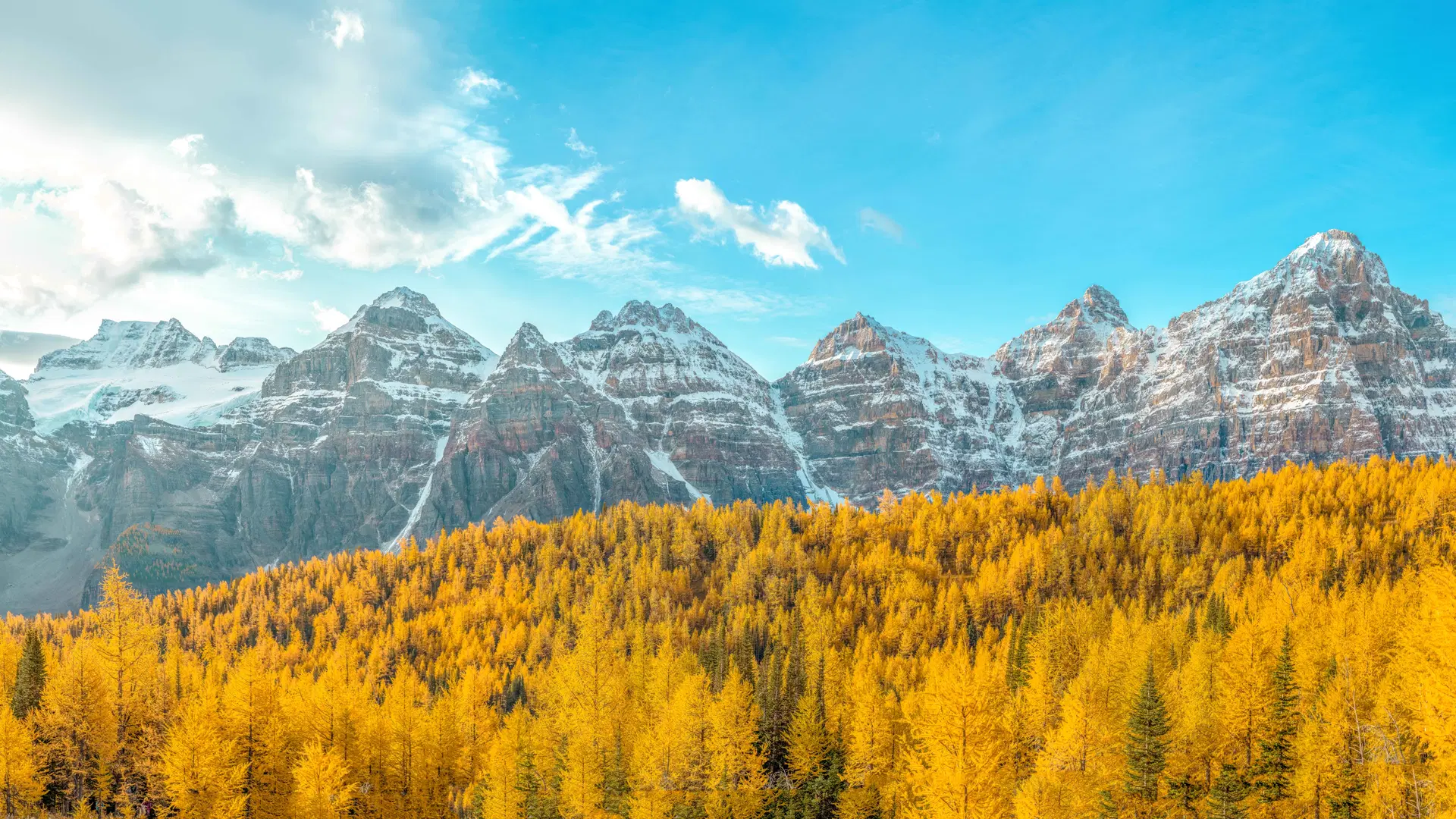
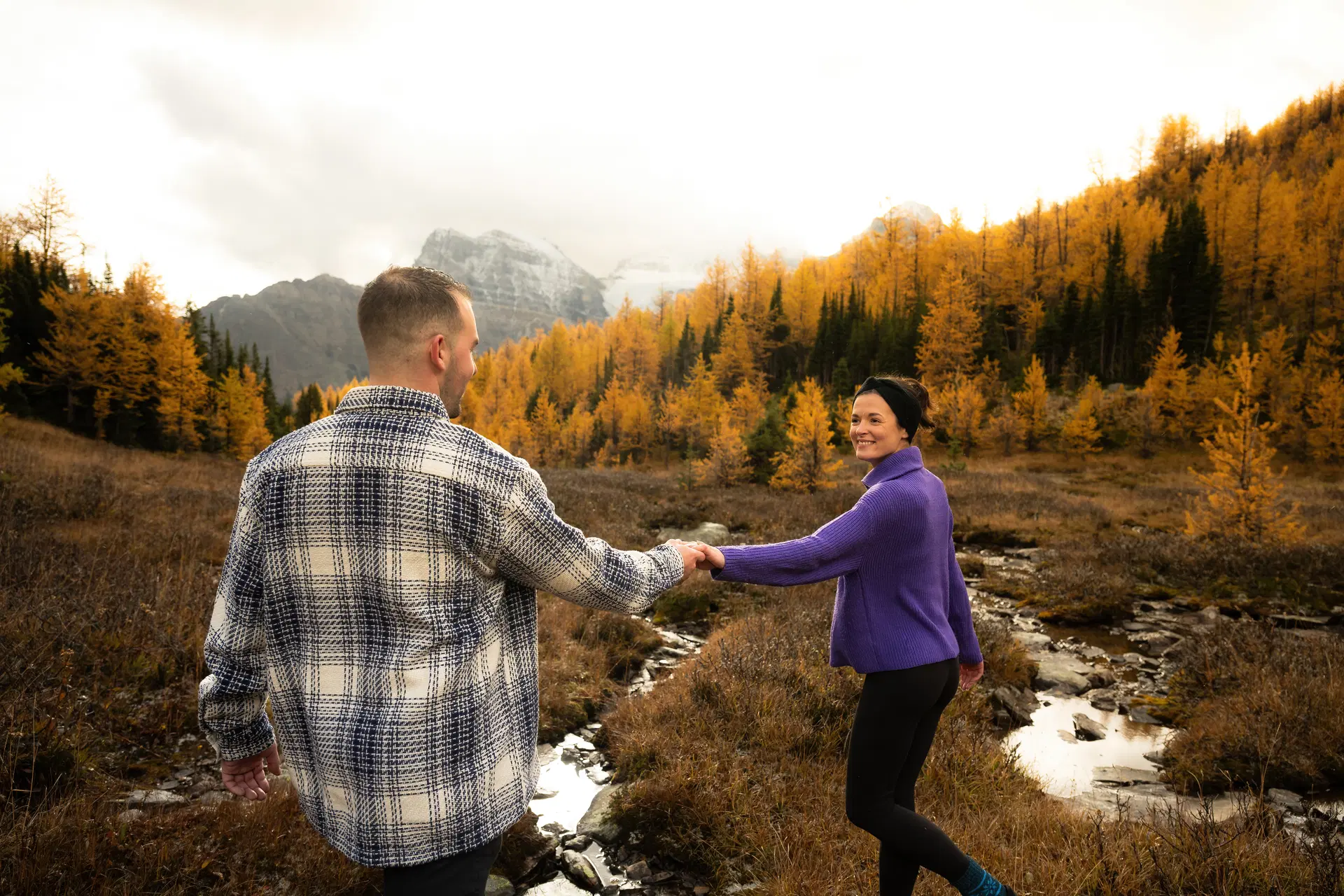
There are plenty of reasons to visit Banff in the fall, but larch season is one of the most special. For a few short weeks each year, the mountains around Banff and Lake Louise are transformed by golden-yellow larch trees, creating some of the most beautiful hiking conditions of the year.
If you’ve never experienced larch season before, it’s easy to see why hikers plan entire trips around it.
Larches are a type of coniferous tree, meaning they have needles like an evergreen. The difference is that, unlike most conifers, larches lose their needles every fall. Before they drop, the needles turn a brilliant shade of yellow and gold, turning all of Banff into a golden wonderland.
The timing is short and can vary from year to year, but larch season typically peaks from mid-late September into early October. Weather, temperatures and elevation all play a role, so there is never a guaranteed date for peak colour. But we’ll explain how to get your best chance. Last season, the larches were about 90% turned by Sept 25, 2025.
Some of the most iconic larch hikes are found around Moraine Lake and Lake Louise, including Larch Valley, Sentinel Pass, Saddleback Pass and Plain of Six Glaciers.
If you’re planning a fall hiking trip to Banff, here’s everything you need to know before heading out.
When Is Larch Season in Banff?
TL;DR Golden larches usually peak from mid-to-late September into early October, but conditions change yearly.
Read the full sectionHide the full section
Larch season is one of the shortest hiking seasons in Banff.
The exact timing changes each year, but the best chance of seeing golden larches is generally from late September into early October. Parks Canada describes mid to late September as the peak season for autumn colours, while Banff & Lake Louise Tourism notes that larch season typically lasts only two to three weeks.
The weather plays a big role.
Cooler temperatures and frost help trigger the colour change, while an early snowfall or sudden change in weather can shorten the season. Higher elevations can also change at a different rate than lower areas.
That means you shouldn’t plan your trip around one specific date and assume every larch tree will be at its brightest.
Instead, think of larch season as a window.
If you’re planning around peak colour, the last week of September and first week of October are generally a good bet, but conditions can vary from year to year.
How to Check Current Conditions
Before heading out, check the current Parks Canada trail conditions for the area you’re hiking.
This is especially important during larch season because conditions can change quickly. A trail that was dry and snow-free one week can have snow, ice or muddy sections the next.
Parks Canada’s trail report provides current information about trail conditions, closures, wildlife warnings and other hazards.
Best Larch Hikes Near Moraine Lake & Lake Louise
TL;DR Larch Valley is the classic moderate hike; Sentinel Pass adds steeper terrain, while Saddleback Pass and Plain of Six Glaciers start from Lake Louise.
Read the full sectionHide the full section
There are several great hikes for seeing larches around Moraine Lake and Lake Louise, and they offer very different experiences.
| Hike | Trailhead | Distance | Elevation Gain | Typical Time | Difficulty |
|---|---|---|---|---|---|
| Larch Valley | Moraine Lake | 4.5 km one way | 570 m | 3.5–4 hrs | Moderate |
| Sentinel Pass | Moraine Lake | 5.6 km one way | 750 m | 4.5–5.5 hrs | Difficult |
| Saddleback Pass | Lake Louise | 3.6 km one way | 600 m | 3–4 hrs | Moderate |
| Plain of Six Glaciers | Lake Louise | 5.8 km one way | 595 m | 4 hrs | Moderate |
Trail distances, elevation gains and times are based on Parks Canada’s current trail information.
These hikes aren’t all equally focused on larches, either. Larch Valley is the obvious choice if seeing golden larches is your main goal, while the Lake Louise hikes combine fall scenery with views of the surrounding mountains, glaciers and Lake Louise.
Larch Valley
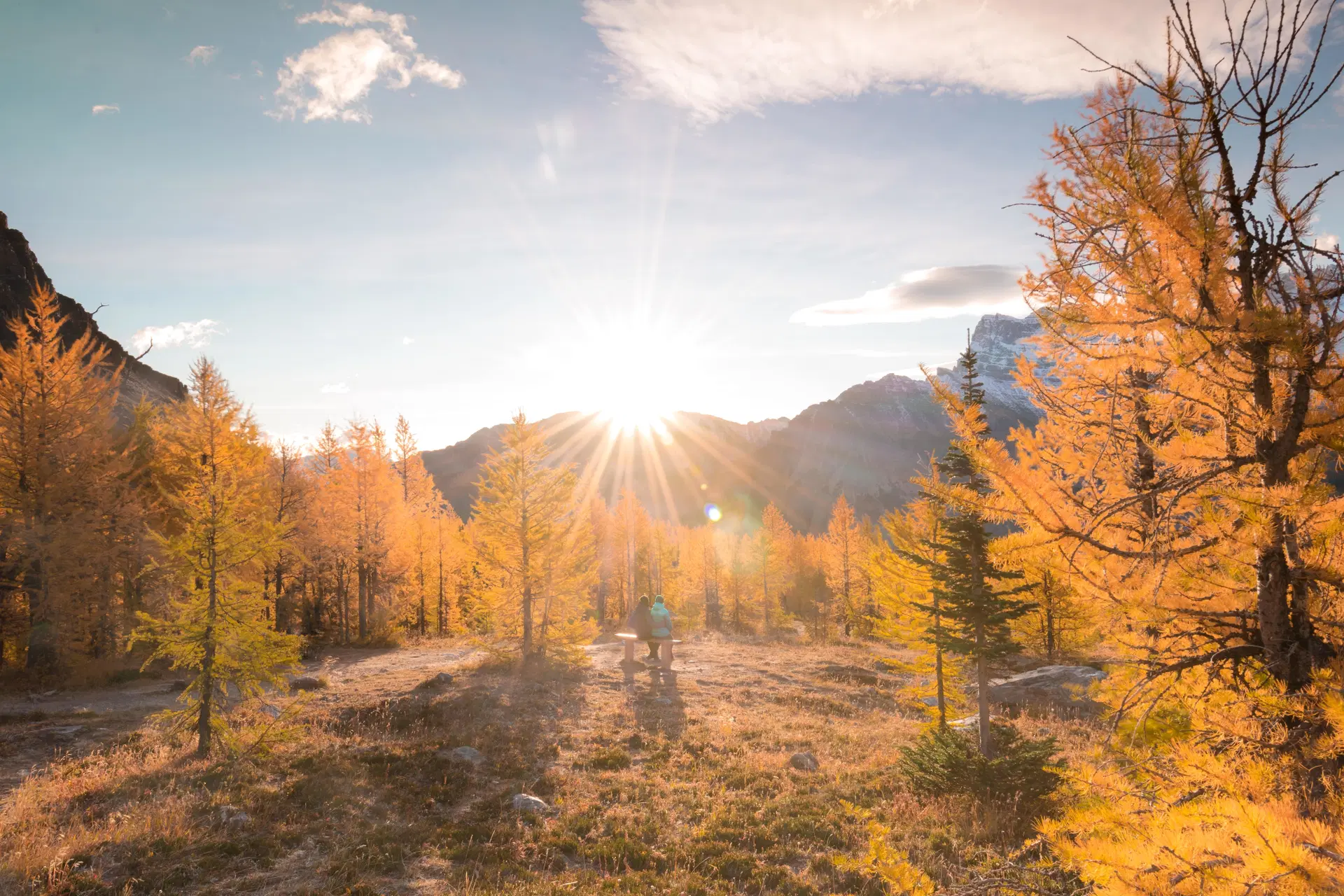
If you’re looking for the classic Banff larch hike, this is it.
Larch Valley is one of the most popular fall hikes in the Canadian Rockies, and for good reason. The trail climbs above Moraine Lake into a high alpine valley surrounded by golden larches and the dramatic peaks of the Valley of the Ten Peaks.
The trail starts near Moraine Lake Lodge and climbs steadily through the forest before opening up into the larch-filled valley.
The hike to Larch Valley and Minnestimma Lakes is 4.5 km one way with 570 metres of elevation gain, taking approximately 3.5 to 4 hours round trip. Parks Canada rates it as a moderate hike.
The first part of the trail is mostly forested, with a series of bends taking you higher above Moraine Lake. Once you reach the larches, the scenery changes dramatically.
You’ll find yourself surrounded by golden trees with towering mountain peaks in every direction. This is where you’ll want to slow down and enjoy the view.
You can continue toward Minnestimma Lakes, which offers even more impressive views of the surrounding peaks, or turn around once you’ve had enough of the larches.
Should You Continue to Sentinel Pass?
Larch Valley and Sentinel Pass are often treated as one hike, but you don’t have to continue to the pass.
If your main goal is seeing golden larches, Larch Valley is already an incredible hike on its own.
Sentinel Pass adds more distance, elevation and steeper terrain. If you’re comfortable with a longer and more challenging hike, continuing to the pass gives you a completely different perspective of the surrounding valleys.
If you’re tired after reaching Larch Valley, there is absolutely nothing wrong with turning around.
Sentinel Pass
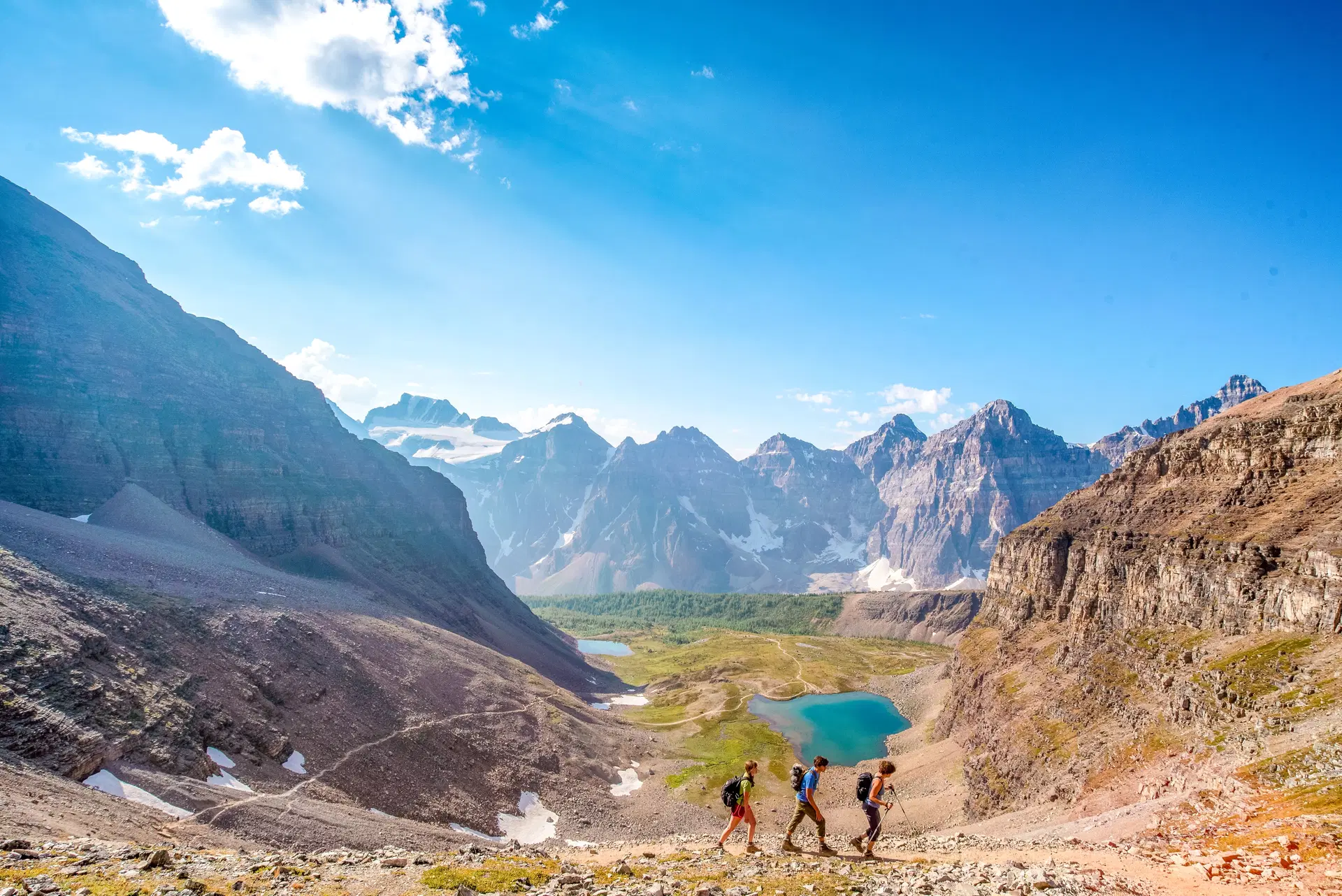
If Larch Valley leaves you wanting more, you can continue toward Sentinel Pass.
The trail continues beyond Larch Valley and climbs through a series of steep switchbacks toward the pass between Pinnacle Mountain and Mount Temple.
The full hike from Moraine Lake to Sentinel Pass is 5.6 km one way, with 750 metres of elevation gain, and takes approximately 4.5 to 5.5 hours round trip.
The final section is considerably steeper than the hike through Larch Valley, so this is better suited to experienced hikers who are comfortable with elevation gain and changing mountain conditions.
The views from the pass are spectacular, but you don’t need to reach Sentinel Pass to have a great larch hike.
If conditions are poor, you’re tired, or you’re running short on daylight, turning around is always the right choice.
Getting to Larch Valley
The trailhead is at Moraine Lake, which means transportation needs to be planned before your hike.
Personal vehicles are not permitted on Moraine Lake Road.
Visitors need to use Parks Canada shuttles, Roam Public Transit or an approved commercial operator like Via Via. Check out our complete guide to Moraine Lake transportation in 2026 to figure out your best plan for getting to the trailhead.
During larch season, this becomes particularly important because Larch Valley is one of the busiest hiking destinations in the area. Parks Canada notes that the trail sees a huge influx of hikers during the fall larch season.
Saddleback Pass
If you want to see larches but would rather hike from Lake Louise, Saddleback Pass is a great option.
The trail starts at Lake Louise and climbs steadily toward Saddleback Pass, with views of Mount Fairview and the surrounding peaks along the way.
The hike is 3.6 km one way with 600 metres of elevation gain, taking approximately 3 to 4 hours round trip.
It’s a shorter hike than Sentinel Pass but still involves a significant amount of elevation gain.
Saddleback Pass is a good option if you want a moderate mountain hike without committing to one of the longer full-day routes.
One thing to keep in mind is that fall conditions can make the trail more challenging. Snow and ice can arrive early at higher elevations, so check the trail report before heading out.
Plain of Six Glaciers
The Plain of Six Glaciers is another popular Lake Louise hike and a great option if you want to combine fall scenery with dramatic mountain and glacier views.
The trail follows the shoreline of Lake Louise before climbing toward the Plain of Six Glaciers. The route is surrounded by towering peaks and offers views of the glaciers above the valley.
The trail is approximately 5.8 km one way with 595 metres of elevation gain, taking around four hours round trip.
While this isn’t as concentrated a larch experience as Larch Valley, you can still see fall colour along the route.
You can also combine the Plain of Six Glaciers with other Lake Louise trails, including Lake Agnes and the Big Beehive, if you’re looking for a longer day.
The Lake Agnes and Plain of Six Glaciers trails are popular summer hiking routes, and their teahouses generally operate from early June into early October.
During late fall, however, conditions can change quickly, so don’t assume that a trail will still be in summer condition simply because it was earlier in the season.
Choosing the Right Larch Hike
TL;DR Choose Larch Valley for the classic half-day experience, Saddleback Pass for a Lake Louise alternative, or Sentinel Pass for a longer, harder day.
Read the full sectionHide the full section
Not sure which hike is right for you? Here’s a simple way to think about it.
Shortest and Easiest Option
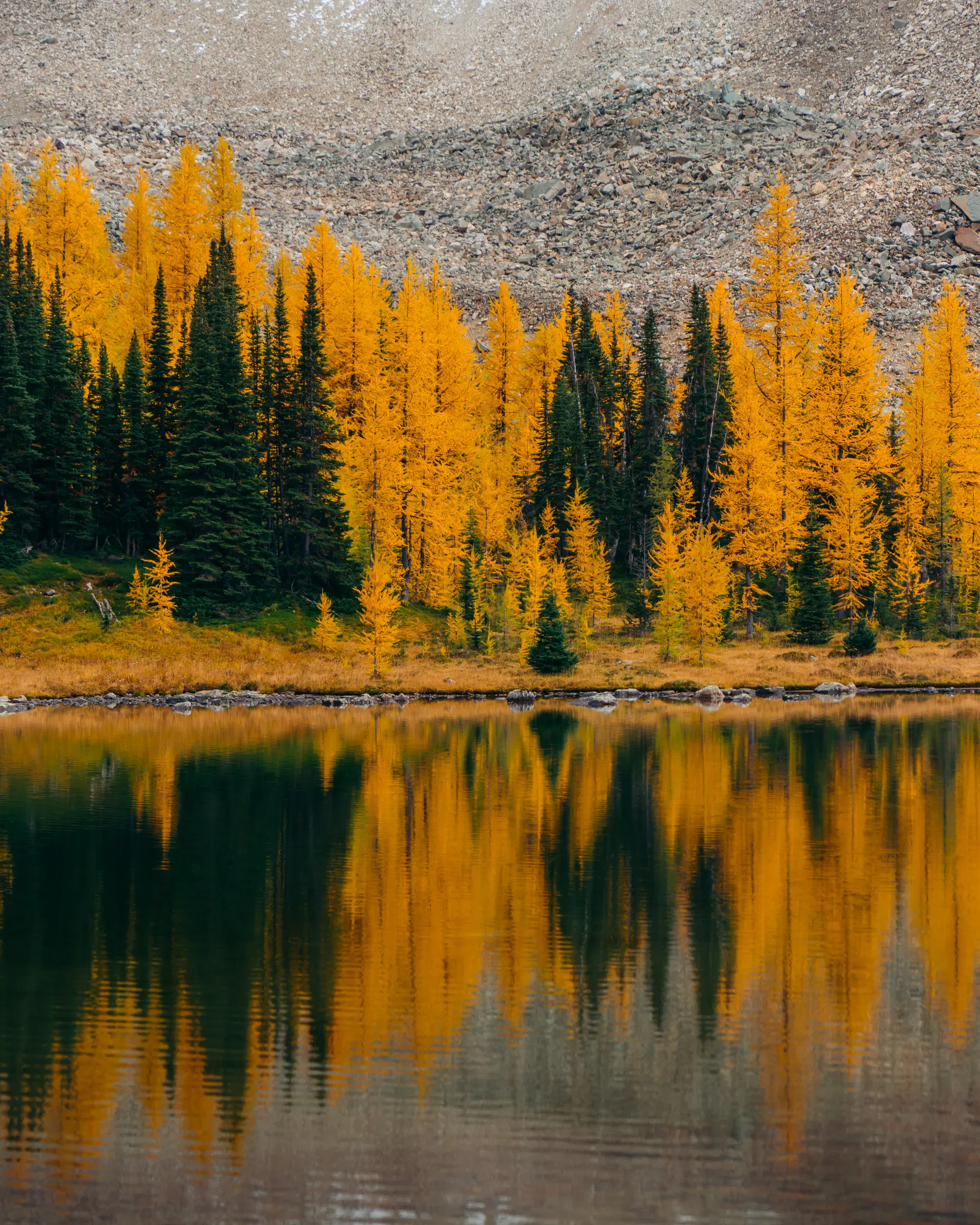
If you want to experience the scenery without committing to a long hike, you can explore the Moraine Lake Lakeshore and Rockpile or choose a shorter Lake Louise trail.
You won’t get the same high alpine larch experience as Larch Valley, but you’ll still get incredible mountain scenery.
Moderate Half-Day Option
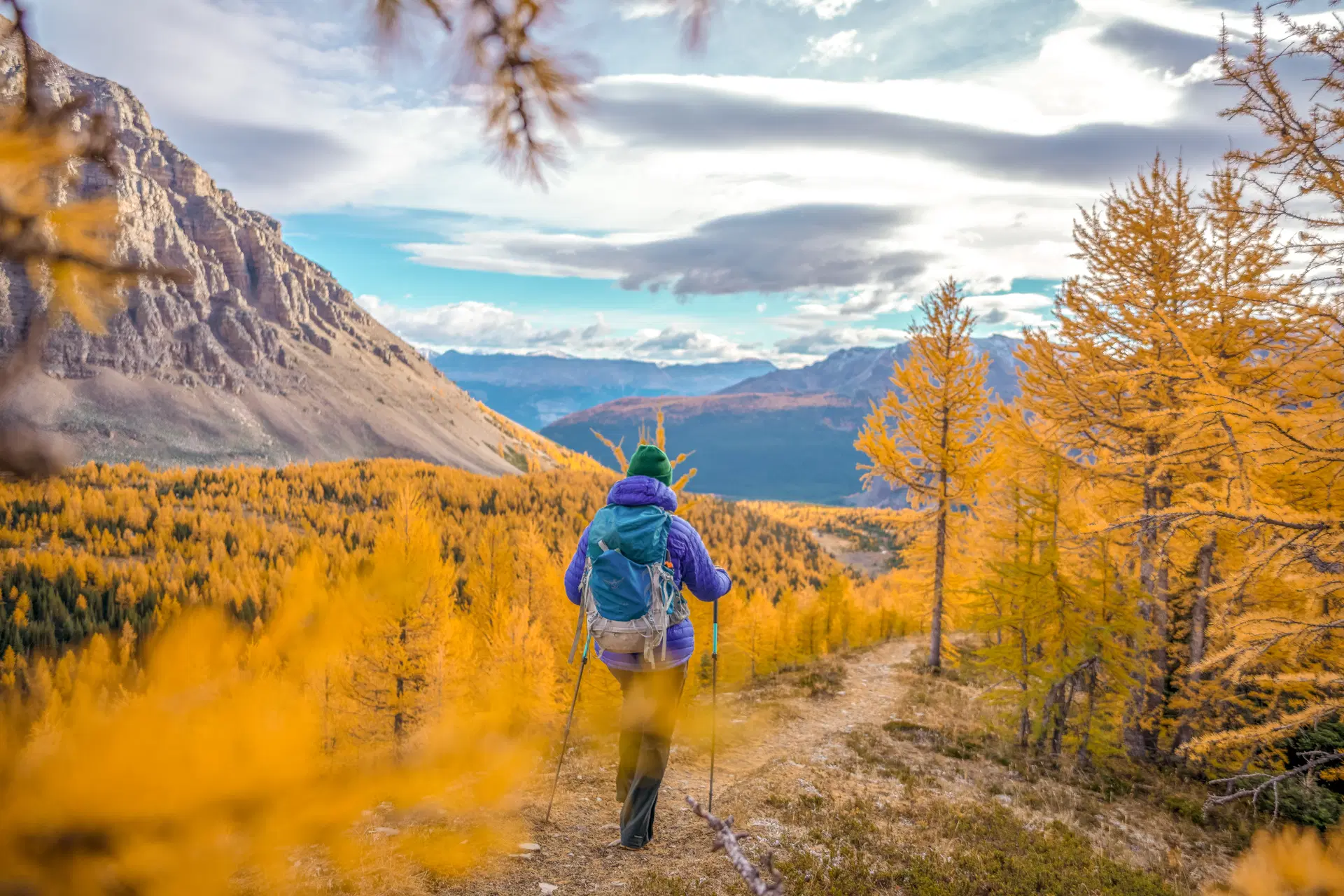
Larch Valley is our top choice.
It gives you the classic golden larch experience without requiring the additional climb to Sentinel Pass.
Saddleback Pass is another good option if you’re staying around Lake Louise and want a moderate hike.
Full-Day or Challenging Option
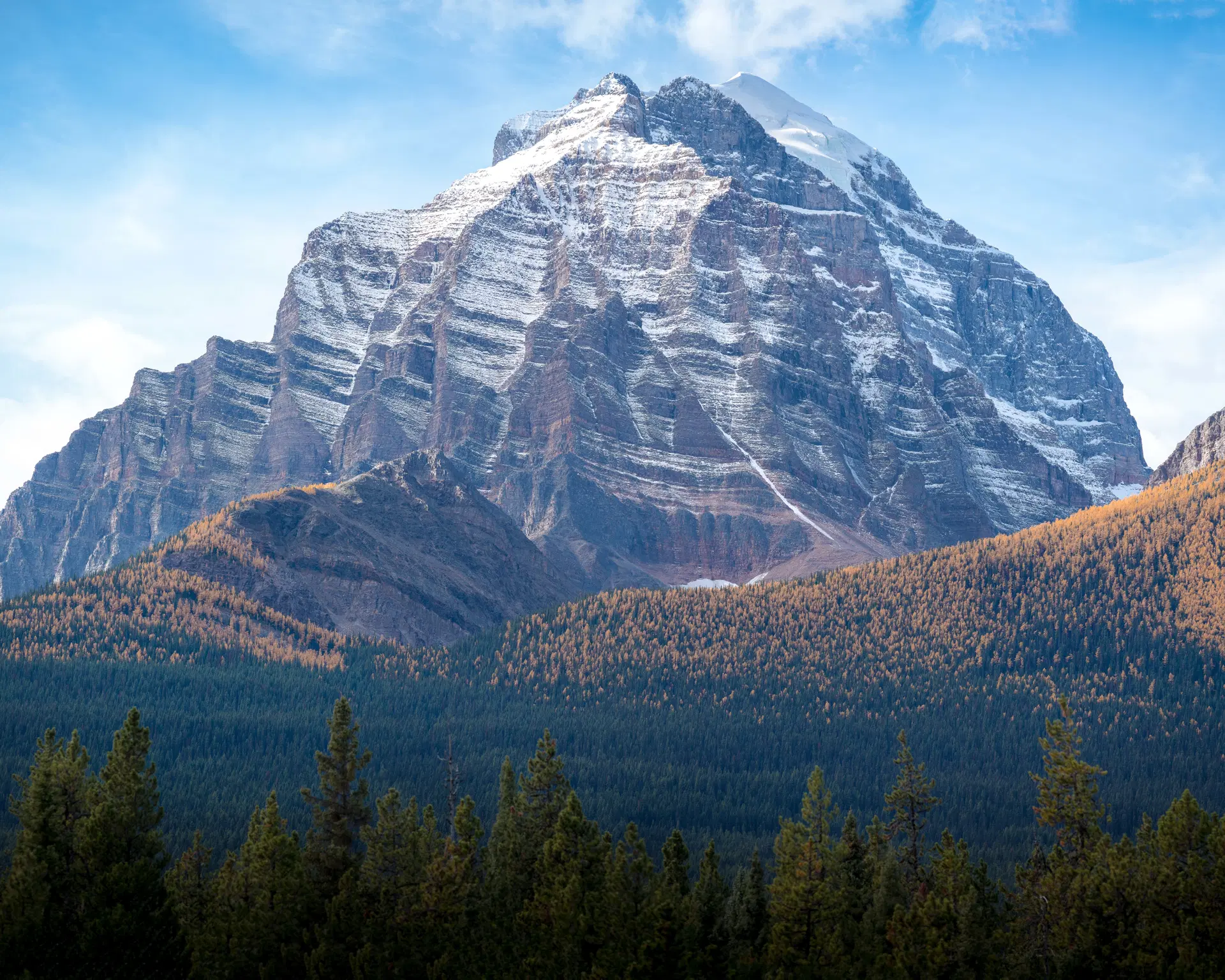
For experienced hikers, Sentinel Pass offers one of the most rewarding hikes in the area.
The combination of Larch Valley, golden trees, steep mountain walls and the views from Sentinel Pass makes this a memorable fall hike.
Getting to the Trailheads Without a Car
TL;DR Moraine Lake requires shuttle access, Lake Louise parking is limited, and peak larch-season transportation should be booked early with enough return-time buffer.
Read the full sectionHide the full section
Transportation is one of the most important parts of planning a larch-season hiking trip. It’s also one of the easiest things to overlook.
Moraine Lake Access Restrictions
You cannot drive your personal vehicle to Moraine Lake.
Moraine Lake Road is closed to personal vehicles year-round. Parks Canada shuttles, Roam Public Transit and licensed commercial operators are permitted to provide access during the operating season.
That means if you’re hiking Larch Valley or Sentinel Pass, you need to plan your transportation before you arrive.
Moraine Lake Shuttle Options
Parks Canada operates shuttle services to Moraine Lake, and Roam Public Transit also provides access during the fall season. Reservations and schedules can change, so check the current information before your trip.
Another option is booking a commercial shuttle.
Via Via provides transportation from Banff and Canmore to Moraine Lake, making it a convenient option for hikers who want to avoid driving and parking.
This can be particularly helpful during larch season when the trail and transportation systems are at their busiest.
Lake Louise Transportation
Lake Louise is also extremely busy during the fall.
While you can technically drive to the Lake Louise area, parking at the lakeshore is very limited and can fill extremely early. Parks Canada recommends using the shuttle system rather than relying on finding a parking space.
If you’re hiking Saddleback Pass or Plain of Six Glaciers, plan how you’re getting to Lake Louise before your hiking day.
Book Transportation Ahead
Larch season is short, and lots of people have the same idea.
Parks Canada specifically identifies Larch Valley as a trail that sees peak use during the fall larch season.
If you know you want to hike during peak colour, don’t wait until the last minute to figure out transportation.
For more information on all of your transportation options, check out the complete Moraine Lake transportation guide and Lake Louise parking and transportation guide.
Plan Your Return Time
This is especially important for longer hikes. When choosing your shuttle, look at the entire hiking timeline rather than just the departure time.
Give yourself extra time for:
- Hiking at a slower pace
- Taking photos
- Stopping for lunch
- Changing trail conditions
- Crowded sections of trail
- Unexpected delays
You want enough time to enjoy the hike without constantly checking your watch.
What to Expect During Larch Season
TL;DR Expect cold mornings, early snow or ice and shorter days. Pack warm, waterproof layers, sturdy footwear, bear spray, food, water and a headlamp.
Read the full sectionHide the full section
Larch season might look warm and sunny in photos, but fall in the Rockies can feel very different.
Cold Mornings
Temperatures can be surprisingly cold, especially early in the morning and at higher elevations.
Even if Banff town feels comfortable, the temperature at Moraine Lake or higher on the trail can be significantly colder.
Early Snow and Ice
Snow can arrive at higher elevations well before winter officially begins.
You may encounter snow, ice or muddy sections on the trail during larch season. Check the current trail conditions before leaving and be prepared to turn around if conditions are beyond your experience level.
Shorter Days
Daylight hours are getting shorter throughout September and October.
This is another reason to start early and plan your transportation carefully.
What to Pack
For a fall mountain hike, bring:
- Warm layers
- A waterproof jacket
- Gloves
- A toque
- Sturdy hiking boots
- Extra socks
- Water
- Food and snacks
- Bear spray
- Sunglasses
- Sunscreen
- A headlamp
- Microspikes if conditions call for them
- A downloaded or physical trail map
Weather can change quickly in the mountains, and Parks Canada recommends being prepared for wind, rain, snow and cold when hiking in the Lake Louise area.
Wildlife & Bear Safety
TL;DR Travel in a tight group, make noise, keep bear spray accessible and check current wildlife advisories.
Read the full sectionHide the full section
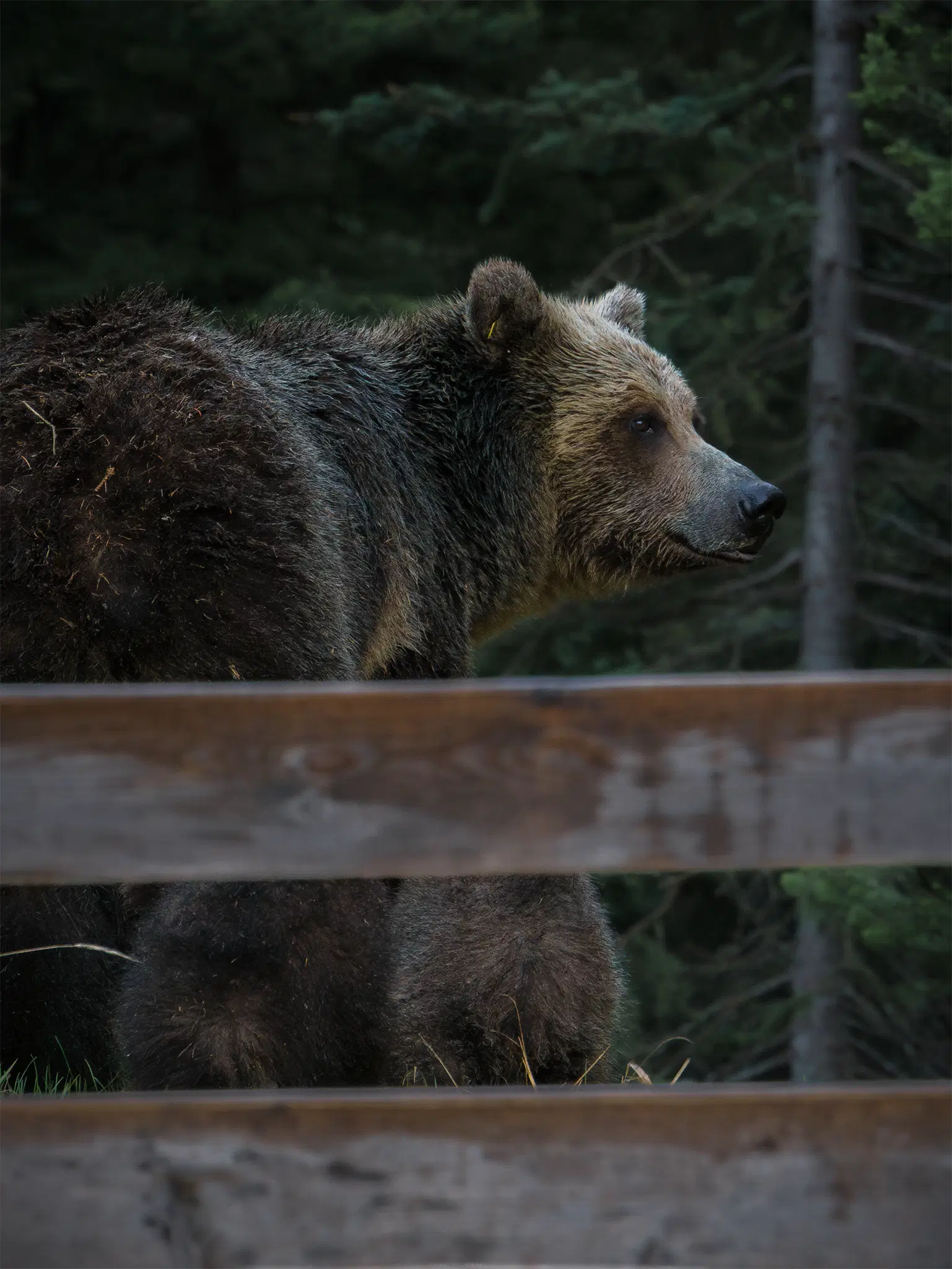
Fall hiking also means you’re hiking during an important time for wildlife.
Banff National Park is bear country, and wildlife encounters can happen anywhere in the park.
Parks Canada recommends travelling in tight groups of four or more, making noise, staying alert and carrying bear spray that you know how to use.
Keep an eye out for signs of wildlife, especially around berry patches and areas with limited visibility.
Hike in Groups
If possible, hike with a group rather than alone.
Staying together makes it easier for wildlife to hear you coming and reduces the likelihood of a surprise encounter.
Make Noise
Talk to your hiking group, especially around corners, dense vegetation and areas where visibility is limited.
You want wildlife to know you’re there before you get too close.
Carry Bear Spray
Bear spray should be easily accessible rather than buried at the bottom of your backpack.
Make sure you know how to use it before you start hiking.
Check Wildlife Advisories
Conditions can change quickly, and wildlife restrictions can be put in place when necessary.
Always check current Parks Canada advisories before heading out.
Crowds & Leave No Trace
TL;DR Expect busy trails. Start early, stay on designated routes, pack out all waste and share viewpoints considerately.
Read the full sectionHide the full section
Larch season is beautiful, but it is also one of the busiest times of year on some of Banff’s hiking trails.
Parks Canada specifically notes that Larch Valley experiences a huge influx of hikers during larch season.
That means you may encounter crowded trail sections, busy viewpoints and full parking areas.
Start Early
An early start can help you avoid some of the crowds, although Larch Valley can still be busy throughout the day.
If you’re taking a shuttle, make sure your transportation schedule works with your hiking plans.
Stay on the Trail
Golden larches are beautiful, but the vegetation around them is fragile.
Stay on designated trails and avoid stepping off the trail to get a photo.
Parks Canada specifically reminds visitors to stay on designated trails and viewpoints around Moraine Lake to protect fragile alpine vegetation.
Pack Everything Out
Anything you bring onto the trail should come back out with you.
That includes food wrappers, tissues, toilet paper and other garbage.
Be Considerate of Other Hikers
Larch season is a popular time to be outside.
Let faster hikers pass when it’s safe, avoid blocking narrow trails and be mindful of other people at viewpoints.
You’re sharing the trail with a lot of people who came for the exact same reason you did.
Travel Tips for Larch Season
TL;DR Visit from late September to early October, book transportation early, check conditions, leave extra time and dress in removable layers.
Read the full sectionHide the full section
Visit During the Right Window
Late September to early October is generally the best time to see golden larches, but exact timing varies each year.
Book Transportation Early
If you know you want to visit Moraine Lake during larch season, arrange transportation ahead of time.
Popular dates can fill quickly.
Check Conditions Before Your Hike
Always check the Parks Canada trail report shortly before you leave.
Leave Extra Time
Don’t plan your hike so tightly that you need to reach your shuttle at the exact moment your estimated hiking time ends.
Give yourself a buffer.
Dress for Fall
Layers are your best friend.
You can start a hike feeling cold and end up warm after climbing several hundred metres, so having layers you can add or remove makes a huge difference.
Frequently Asked Questions
TL;DR Larch Valley is a moderate 4.5 km one-way hike that usually takes 3.5–4 hours; use a shuttle to reach Moraine Lake and continue to Sentinel Pass only if prepared.
Read the full sectionHide the full section
When is larch season in Banff?
Larch season typically occurs from late September into early October, with peak colour often around the last week of September and first week of October. The exact timing varies depending on weather and conditions each year.
When is the best time to hike Larch Valley?
The best time is generally during peak larch colour, which typically falls in late September or early October.
There is no guaranteed peak date, so check current conditions and recent reports before your trip.
How difficult is the Larch Valley hike?
Larch Valley is considered a moderate hike.
The trail is 4.5 km one way with approximately 570 metres of elevation gain and takes around 3.5 to 4 hours round trip.
The elevation gain is significant, but you don’t need to continue to Sentinel Pass to enjoy the hike.
Can you hike Larch Valley without a car?
Yes.
You cannot drive your personal vehicle to Moraine Lake, but you can reach the trailhead using Parks Canada shuttles, Roam Public Transit or a commercial shuttle.
How do you get to Moraine Lake during larch season?
You can use Parks Canada shuttles, Roam Public Transit or an approved commercial operator.
For a more convenient option from Banff or Canmore, VIA VIA Moraine Lake provides shuttle transportation directly to Moraine Lake.
Can you see larches at Lake Louise?
Yes.
There are larches around the Lake Louise area, and hikes such as Saddleback Pass offer fall scenery.
The Lake Louise area also provides access to hikes like Plain of Six Glaciers and Lake Agnes, which can be beautiful during the fall.
How long does Larch Valley take?
Parks Canada estimates approximately 3.5 to 4 hours round trip for Larch Valley and Minnestimma Lakes. The trail is 4.5 km one way with 570 metres of elevation gain.
Your actual time will depend on your pace, trail conditions and how much time you spend enjoying the scenery.
Is Larch Valley or Sentinel Pass better?
It depends on what you’re looking for.
If your main goal is seeing golden larches without committing to a longer hike, Larch Valley is an excellent choice.
If you’re an experienced hiker looking for more elevation, steeper terrain and bigger views, continue toward Sentinel Pass.
You can also make the decision once you reach Larch Valley. You don’t have to commit to Sentinel Pass before you start.
Final Thoughts
TL;DR Larch season is brief and unpredictable. Plan transportation, monitor conditions and allow plenty of time to enjoy Moraine Lake or Lake Louise.
Read the full sectionHide the full section
Larch season is one of those experiences that makes Banff feel completely different.
For a few short weeks, the green alpine forests turn brilliant gold, the temperatures start to drop, and the mountains take on a completely different atmosphere.
If you’re looking for the classic larch experience, Larch Valley is hard to beat. The combination of golden trees, alpine meadows and the Valley of the Ten Peaks makes it one of the most memorable hikes in Banff.
For a longer and more challenging day, continue to Sentinel Pass. Or head to Lake Louise and explore Saddleback Pass or Plain of Six Glaciers for a different take on fall in the Rockies.
Just remember that larch season is short and unpredictable. Peak colour can shift from one year to the next, and mountain conditions can change quickly.
Plan your transportation ahead of time, check trail conditions before you leave, pack for changing weather and give yourself plenty of time to enjoy the hike.
And if you’re heading to Moraine Lake without a car, Via Via Moraine Lake Shuttle can take care of the transportation so you can spend less time worrying about getting to the trailhead and more time enjoying those golden larches.